

The Anchorage Islands development comprised development of private title and associated public infrastructure in Tweed Heads, New South Wales. Development took place circa 1996 to 1999.
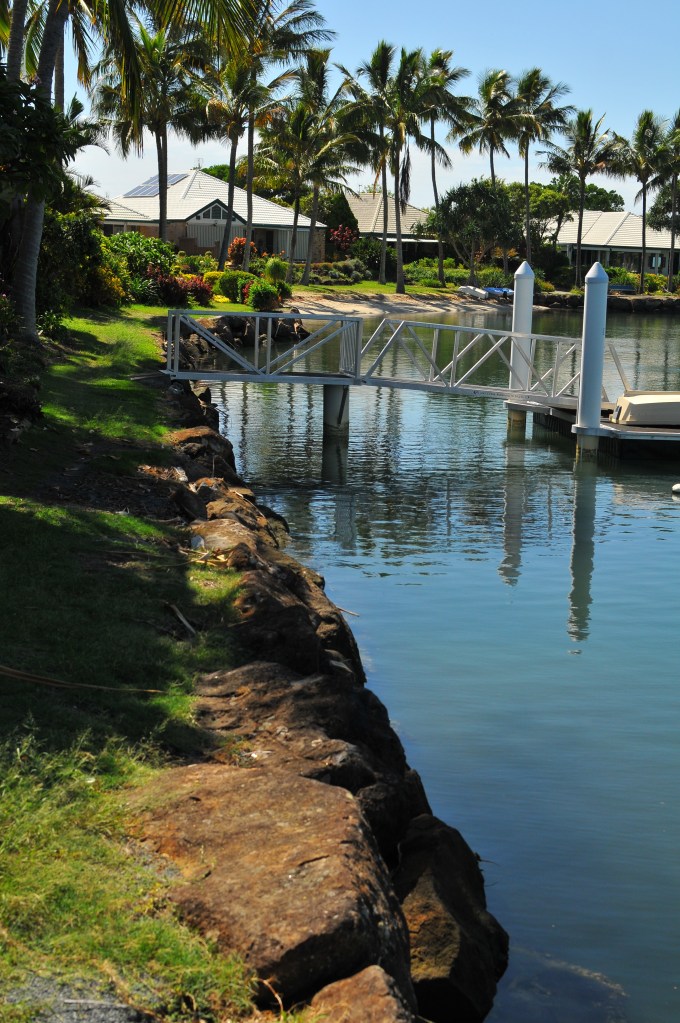
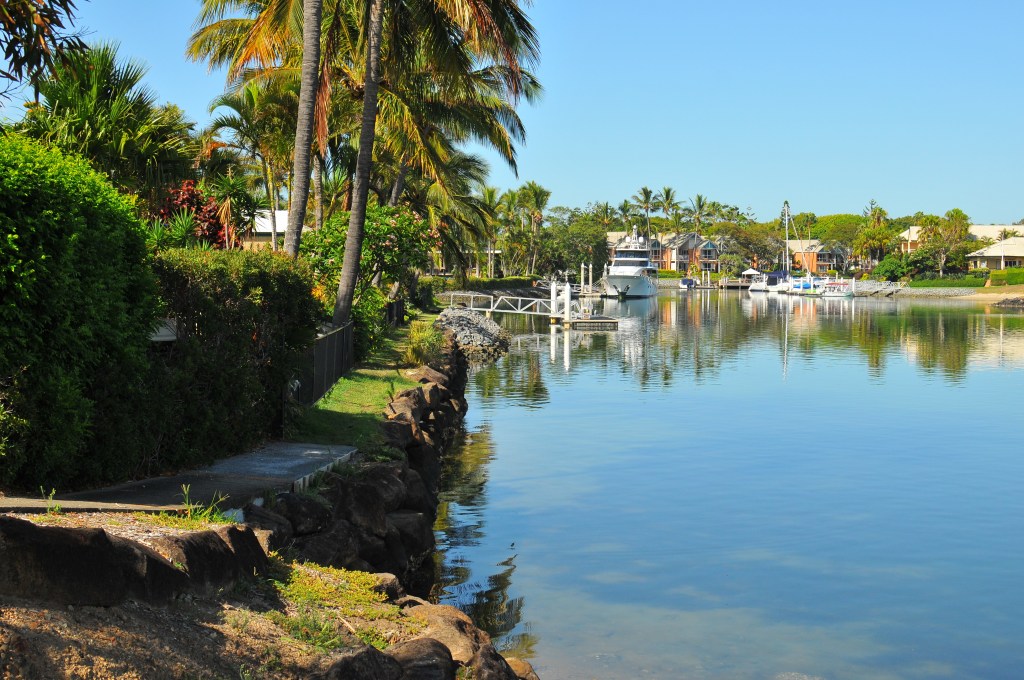
Sureside was engaged by Tweed Shire Council (‘TSC’) to conduct a site inspection and develop concept options for remediation of the Anchorage Landing ‘Boulder Wall’. The Boulder Wall consisted of large rock (boulder) units stacked in a near-vertical arrangement and is located between the water body (Anchorage Harbour), a public pathway and various private titles.
This project presented with numerous challenges, including:
Understanding the initial condition of the wall at construction. to address this Sureside obtained reference photos from the community to review original design detailing, intent and boundary conditions.
Options for intervention were limited by spatial constraints including abutting properties, navigable waters and seagrass habitat close to shore. sureside developed Various options that variably responded to site constraints and TSC objectives. Each option was assessed through the MCA which identified key options that best met objectives.
The asset did not meet certain resilience measures and could not do so without significantly impacting upon site values. Sureside presented several examples where upgrade of the asset to meet all resilience measures would have a negative impact upon the site and nominated measures to enhance asset resilience going forward.
the project involved a second phase of investigation to the structure to correlate observed external indicators of deterioration to that of internal conditions. it is the internal conditions that are of primary importance to function. the investigation was principally destructive testing to verify project internal conditions.
There were no ‘straight lines’ in the revetment. Solutions needed to consider how interfacing could be achieved between the natural amenity values and constructed solutions to enhance resilience. Sureside developed solutions that embraced natural variations in ‘boulder wall’ alignment that contributed to site amenity but led to issues such localised scour, trip points and degradation of pathway surface quality. Solutions incorporated interface details to maintain path function.
Simple structures can be the most difficult to interpret. Sureside valued evidence in making its assessment of the forms of deterioration that had occurred over the wall’s life to date. The ‘stacked rock’ form of construction is not an example of good practice and the original construction had a number of faults and these were found to have manifested in deterioration. However small amendments had the capacity to substantially improve future wall performance.
Sureside assessed that there were movements occurring within the Boulder Wall that had led to steady degeneration of the wall structure. Additionally, localised scour issues presented TSC with ongoing maintenance issues.
Two levels of intervention (minor and major) were identified as being required to address local scour issues and wall stability. Minor intervention focussed upon management of runoff from land into the waterway and was recommended to be undertaken as soon as practicable. Major intervention focussed upon renewal or rehabilitation of the Boulder Wall prior to it becoming unserviceable. Residual lives were identified for sections of the Boulder Wall and documented on a plan drawing covering the asset length.
Options for minor and major intervention were developed by Sureside and concept drawings developed for each along with indicative costs for each option. An MCA (multi-criteria analysis) was prepared in consultation with TSC which concluded that placement of rock to stabilise the wall merited strongest consideration. As the MCA also include a comprehensive sensitivity analysis, it was also concluded that reconstruction of the Boulder Wall with minor modifications should also warrant consideration.
Sureside delivered outstanding value for money for TSC with a $15,000 commission including a comprehensive site inspection report, options report, MCA and design report with indicative costs.
Most notable was that the inspection was carried out by a Principal Engineer. With experience, attributes of the wall such as base rocks projecting from the front profile were not misinterpreted as signs of movement. Instead evidence of movement was considered carefully with reference to historical evidence being considered the optimum method of assessment.
Solutions that provided a heavily engineered solution were suitably considered for their effects upon site amenity and impacts upon neighbouring residents. Reinstating the original wall design, for all of its limitations, emerged as a highly credentialed option given the site constraints. Rather than being dismissed, enhancements were proposed and risks discussed in detail to inform the decision making process.
project client: tweed shire council
sureside client: tweed shire council
services: Condition Assessment, cost estimation, multi-criteria analysis
location: tweed heads, south east queensland
time period: 2019